



Good day, dear readers!
In today's article, we will look at such a disease of the spine as osteochondrosis, as well as its symptoms, causes, types, diagnosis, treatment and prevention.well...
What is osteochondrosis?
Osteochondrosis- a disease of the spine, the characteristic feature of which is degenerative-dystrophic damage to the intervertebral discs, and then to the vertebrae themselves.
The main symptom of osteochondrosis is neck or back pain.Other symptoms include muscle atrophy, sensory disturbances, and disturbances in the functioning of internal organs.Depending on the location of the pathological process, cervical, thoracic and lumbar osteochondrosis are distinguished.If this disease and its treatment are not given the necessary attention, the process of damage to the spine will become irreversible.
In the English-language literature, the term "osteochondrosis" refers to a group of diseases of the musculoskeletal system such as osteochondropathy.
The main factor or reason that leads to the development of osteochondrosis is the uneven distribution of the load on the spine, which occurs when carrying heavy objects in one hand or shoulder (for example, a bag, backpack), sitting for a long time in the wrong position, resting at night on an uneven mattress or pillow.Additional factors can also include a sedentary lifestyle, obesity, injuries and flat feet.
All of the above situations lead to frequent pain in the cervical, thoracic or sacral spine for years.
According to statistics, osteochondrosis occurs in 40 to 90% of the world's population, mostly at the age of 30-35.In unfavorable conditions, this disease develops in adolescents, which is most often facilitated by carrying a heavy, uncomfortable backpack, especially on one shoulder, uncomfortable shoes and injury.
Development of osteochondrosis
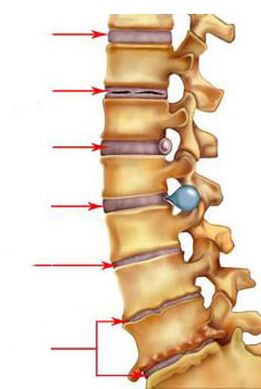
The development of osteochondrosis takes place in 4 different phases (stages):
Osteochondrosis 1st stage.It is characterized by the beginning of a pathological process in the nucleus pulposus of the intervertebral disc - its dehydration (dehydration) occurs, and then the height of the disc decreases.At the same time, cracks begin to appear in the fibrous ring.At this stage, the patient usually does not feel any changes.Discomfort can occur when sitting in a sitting position that is unusual for a person or when actively exercising.
Osteochondrosis 2 stages.As the height of the discs decreases, the distance between adjacent vertebrae also decreases, and the spinal muscles and ligaments begin to drop slightly.This process causes hypermobility of the two adjacent vertebrae, which can lead to their slipping and/or displacement.Spondylolisthesis is formed.Due to the displacement of the vertebrae, the patient under a certain load feels real discomfort, and sometimes pain in the area of the pathology.
Osteochondrosis 3rd stage.It is characterized by the formation of disc prolapses and protrusions, sometimes subluxations and arthrosis occur in the intervertebral joints.The patient may feel stiffness in some movements, tingling in the limbs, and sometimes numbness appears.With the 3rd degree of osteochondrosis, there are already pains in the back, neck and coccyx, depending on the location of the disease.
Osteochondrosis 4th stage.The body tries to correct the excessive mobility of the vertebrae, as well as to normalize the functioning of the spine.At the junction of the vertebrae with pathology, new bone formations grow on each of them - osteophytes, which, when formed in an unnecessary place, can cause microtrauma of the nerve root, and sometimes the adjacent vertebra.Fibrous ankylosis can start in the discs and joints.The vertebral-motor segment heals and becomes, so to speak, bricked up.In this case, the main signs of osteochondrosis are minimized, and sometimes even practically imperceptible.
Symptoms of osteochondrosis
The main symptoms of osteochondrosis are discomfort and pain in the back or neck.The intensity of the pain and other accompanying signs of this disease depend on the degree (stage) of osteochondrosis.
Of course, due to the pathology of the intervertebral discs, their hernia, growths on the vertebrae (osteophytes), a large number of disorders occur, such as circulatory disorders, pinched nerves, irritation and interference with the normal operation of the spinal cord, swelling and even fibrosis of the structures surrounding the spine.All these disorders can cause an extensive clinical picture of the disease and be expressed by a large number of different symptoms, therefore, without a thorough diagnosis of osteochondrosis, it is very difficult to make a correct diagnosis and prescribe adequate treatment.
However, let's consider the main symptoms of osteochondrosis:
- pain in the back, cervical region, lower back, shoulders and even ribs;
- discomfort, stiffness of the back during certain movements, lifting something;
- numbness of the extremities (arms and/or legs);
- pain in arms and legs, chills;
- muscle spasms;
- disorders in the work of genital organs;
- headaches, dizziness;
- pain in the region of the heart;
- sensory disturbance;
- muscular hypotension;
- increased fatigue, sometimes even in the eyes.
In addition, depending on the area of the spine affected by osteochondrosis, the following symptoms differ:
Osteochondrosis of the cervical spine.Pains in the arms and shoulders, headache, dizziness, spots or patches before the eyes and noise in the head are prevalent.These signs may also indicate the presence of vertebral artery syndrome, which can also cause complications in the work of the heart muscle and myocardial vessels if other diseases are present in them.
Osteochondrosis of the thoracic spine.Pain in the chest, heart area and breathing discomfort prevail.
Osteochondrosis of the lumbosacral spine.Pain prevails in the lower back, radiating to the legs or pelvic organs.Sexual dysfunction.
Complications of osteochondrosis
If osteochondrosis is not treated and left to chance, it can lead to the development of the following diseases and pathologies:
- intervertebral disc herniation (spinal hernia);
- protrusion;
- kyphosis;
- radiculitis;
- deposition of salt in the intervertebral space;
- spinal cord stroke;
- limb weight loss and atrophy;
- paralysis of the legs
Causes of osteochondrosis
The causes of osteochondrosis are not fully understood, so let's consider the most popular of them:
- mechanical back injury (spine);
- physical overexertion of the body, hard work;
- nervous exhaustion, stress;
- metabolic disorders, poisoning;
- frequent stay in places with increased vibration;
- hereditary predisposition;
- sedentary lifestyle, sedentary work;
- poor posture at an early age;
- overweight, obesity;
- flat feet;
- wearing uncomfortable shoes (tight, heels);
- night rest on an uncomfortable bed - mattress, pillow;
- frequent dehydration;
- malnutrition, hypovitaminosis;
- smoking;
- pregnancy.
Classification of osteochondrosis
The classification of osteochondrosis is very diverse, because the disease itself is not fully understood.
Let's highlight the most popular methods of dividing this disease.
I distinguish between osteochondrosis:
By localization:
- Cervical region ©
- Thoracic (Th or D)
- lumbar (L)
- sacral region (S)
According to clinical manifestations:
1. Cervical level ©.
1.1.Reflex syndromes.
- cervicalgia;
- cervicocranialgia;
- cervicobrachialgia with vegetative-vascular, neurodystrophic or muscle-tonal manifestations.
1.2.Radicular syndromes.
- Discogenic lesion of the root of the cervical spine.
1.3.Radicular-vascular syndromes.
2. Thoracic level (Th or D).
2.1.Reflex syndromes.
- thoracalgia with vegetative-visceral, neurodystrophic or muscle-tonal manifestations.
2.2.Radicular syndromes.
- Discogenic lesion of the thoracic roots.
3. Lumbosacral level (L, S).
3.1.Reflex syndromes.
- lumbago (lumbago);
- lumbodia;
- lumboischialgia with vegetative-vascular, neurodystrophic or muscle-tonal manifestations.
3.2.Radicular syndromes.
- Discogenic root damage of the lumbosacral region.
3.3.Radicular vascular syndromes - radiculoischemia.
Diagnosis of osteochondrosis
Diagnosis of osteochondrosis includes the following examination methods:
- medical history;
- x-ray examination (x-ray);
- myelography;
- neurological examination.
In addition, they can assign:
- computed tomography (CT);
- nuclear magnetic resonance (NMR);
- magnetic resonance imaging (MRI).
Treatment of osteochondrosis

Treatment of osteochondrosis involves the use of a set of measures that must be carried out over a fairly long period of time (from 1-3 months + about 1 year for rehabilitation), to which many patients react very ambiguously.Therefore, it should be noted that, by indirectly following the doctor's recommendations, the prognosis for the patient's recovery is minimal.
Self-medication often becomes an additional problem in the treatment of osteochondrosis.The fact is that, as already written earlier in the article, the clinical picture of this disease is quite ambiguous and broad.The patient, without a diagnosis, begins to choose drugs for what hurts, and, eliminating the pain, continues to deal with everyday life, while the disease continues to progress.
Important!Timely consultation with a doctor, detailed health diagnosis and strict adherence to all doctor's recommendations increase the positive prognosis for recovery!
Treatment of osteochondrosis is carried out by two main methods: conservative and surgical treatment.In addition, there are general recommendations for the treatment of osteochondrosis, such as diet and rehabilitation.
Conservative treatment of osteochondrosis
Conservative treatment of osteochondrosis is aimed at alleviating pain, normalizing the work of the spine and its components, as well as preventing further degenerative changes in the human "axis".
Conservative treatment of osteochondrosis includes:
Drug therapy.It is used to relieve pain and inflammation of the tissues that make up the spine, as well as to normalize metabolic processes.
Various therapeutic blockades are also used to relieve pain and inflammation.Moreover, they help to reduce muscle-tonic syndrome.Among the therapeutic blockades, the following stand out: trigger point blockades, as well as intracutaneous, facet, paravertebral and epidural blockades.
Physiotherapy.It is used to relieve pain, improve the effectiveness of drug therapy and during the rehabilitation period.The treatment is carried out with ultrasound, laser, magnetic fields, low frequency currents, etc.
Physical therapy (physical therapy), kinesitherapy.Specially selected, dosed exercises aimed at correcting the muscle corset, strengthening it, correcting posture, normalizing the work of muscle tissues and their flexibility, decompressing nerve roots and preventing possible complications of the disease.All of the above is achieved by normalizing the metabolism and nutrition of the intervertebral discs, blood circulation, restoring the distance between the discs and the vertebrae, and distributing the load on the entire musculoskeletal system.
Massage.It is used to improve blood circulation, relieve stiffness and tension in muscle tissue and improve overall health.
Hydromassage.It helps in normalizing circulation, metabolism, increasing the tone of muscle tissue and normalizing the work of the nervous system.It involves massaging the body with a targeted stream of water with a certain pressure.True, in recent years, hydromassage with the help of air bubbles that are applied to the body in specially equipped baths or pools has prevailed.
Manual therapy.It is used according to an individually selected program, targeting the musculoskeletal system.It helps improve blood and lymph circulation, metabolism, mobility of the musculoskeletal system, strengthen the immune system and prevent possible complications.
Extension (traction) of the spine.It is used with the help of special equipment to increase the intervertebral space and correct the structure of the spine, which usually leads to the minimization or complete removal of pain.
The combined use of the above methods for the treatment of osteochondrosis has a good effect.
Medicines for osteochondrosis
Among the drugs for osteochondrosis are:
- Anti-inflammatory drugs.
- Antispasmodics.
- antioxidants:vitamin C, vitamin E.
- Blood microcirculation stimulants.
- Means for preventing further degeneration of cartilaginous tissue.
Diet for osteochondrosis
For osteochondrosis, you need to eat 6 times a day, in small portions, drink at least 1.5 liters of water a day.
What you can eat with osteochondrosis:dairy products, lean meat (chicken, beef), jelly, fish jelly, jelly meat, fresh vegetables (tomatoes, cucumbers, onions, carrots, beets, peppers, cabbage, celery, broccoli), fruits, avocados, nuts, sunflower seeds, spinach, mushrooms.
What should be minimized in food for osteochondrosis:grapes, legumes (peas, beans, etc.), flour products, hot spices, sugar, salty foods, meat broths and cured meats.
It is better to steam food, because... With this method of preparation, the products retain the maximum amount of vitamins and microelements.
Try seasoning salads with olive oil.
Surgical treatment of osteochondrosis
Surgical treatment of osteochondrosis is used when the conservative method is ineffective.It is prescribed by a doctor or a doctor's council.It can also be used for severe damage to the spine and its components.
Treatment of osteochondrosis with folk remedies
Important!Before treating osteochondrosis at home with folk remedies, be sure to consult your doctor!
Treatment of osteochondrosis with ready-made herbal preparations
Commentary by herbalist A.A.Malgin: Herbal treatment (herbal treatment) has certain wonderful benefits, for example:
- herbal medicine removes the causes of the disease,
- plants have a minimal number of contraindications (usually individual intolerance),
- herbal treatment has minimal side effects,
- herbs contain a large number of vitamins and other useful substances that, in addition to curing disease, also contribute to the health of the organism as a whole,
- accessibility.
Herbalists offer ready-made solutions that already take into account the specific composition of the collection, dosage, sequence, etc.The courses are developed by medical specialists based on their many years of experience.
Other folk remedies against osteochondrosis
Dough.Prepare a little dough from 300 grams of rye flour and let it rest at room temperature for a couple of days.Drink a glass of milk and rub turpentine on the place where your back hurts.Then wrap the dough in gauze and apply to the painful area.Wrap it with cellophane on top and then with a scarf or towel.After a while, you may feel a burning sensation in the area, but hold on as long as you can.Do the procedure every other day.Use each batch of dough no more than 3 times.
Sabelnik.Make a tincture of kerosene.Before going to bed, rub the place where your back hurts with the prepared tincture and tie a scarf around it.In addition, you can take a tincture of five-finger a few drops before going to bed.
Ointment for osteochondrosis.Add 1 tbsp to the bowl.spoon of flour, 1 egg, 100 g of butter and 1 spoon.spoon of vinegar, mix everything well and put it in a dark place for 2 days to soak.Then skim off any foam that has formed from the mixture.Mix the mixture well again and rub the resulting ointment into the painful area.
Radish.Mix 300 ml of radish juice, 200 g of honey and 100 ml of vodka.Rub the resulting mixture on your back.This folk remedy also helps with radiculitis and rheumatism.
Prevention of osteochondrosis
To prevent pathological changes in the spine, follow these recommendations:
- lead an active lifestyle - swim, run, do morning exercises, ride a bike;
- pay attention to your posture during sitting work - keep your back straight and your shoulders relaxed;
- perform sitting work only on comfortable chairs, armchairs that can provide support for the spine;
- when you work sitting down, occasionally do exercises and warm up;
- sleep on a comfortable (orthopedic) mattress, pillow;
- try to avoid carrying heavy objects, and if you do, lift them slowly;
- do exercises to maintain excellent condition and pump up the abdominal muscles;
- wear comfortable shoes, avoid wearing heels, especially during pregnancy;
- try to eat food enriched with vitamins and microelements.
Which doctor should I consult for osteochondrosis?
- Vertebrologist;
- Neurologist;
- Osteopath;
- Orthopedist.